Dec 20, 2025


Radical AI Signs Memorandum of Understanding with the U.S. Department of Energy
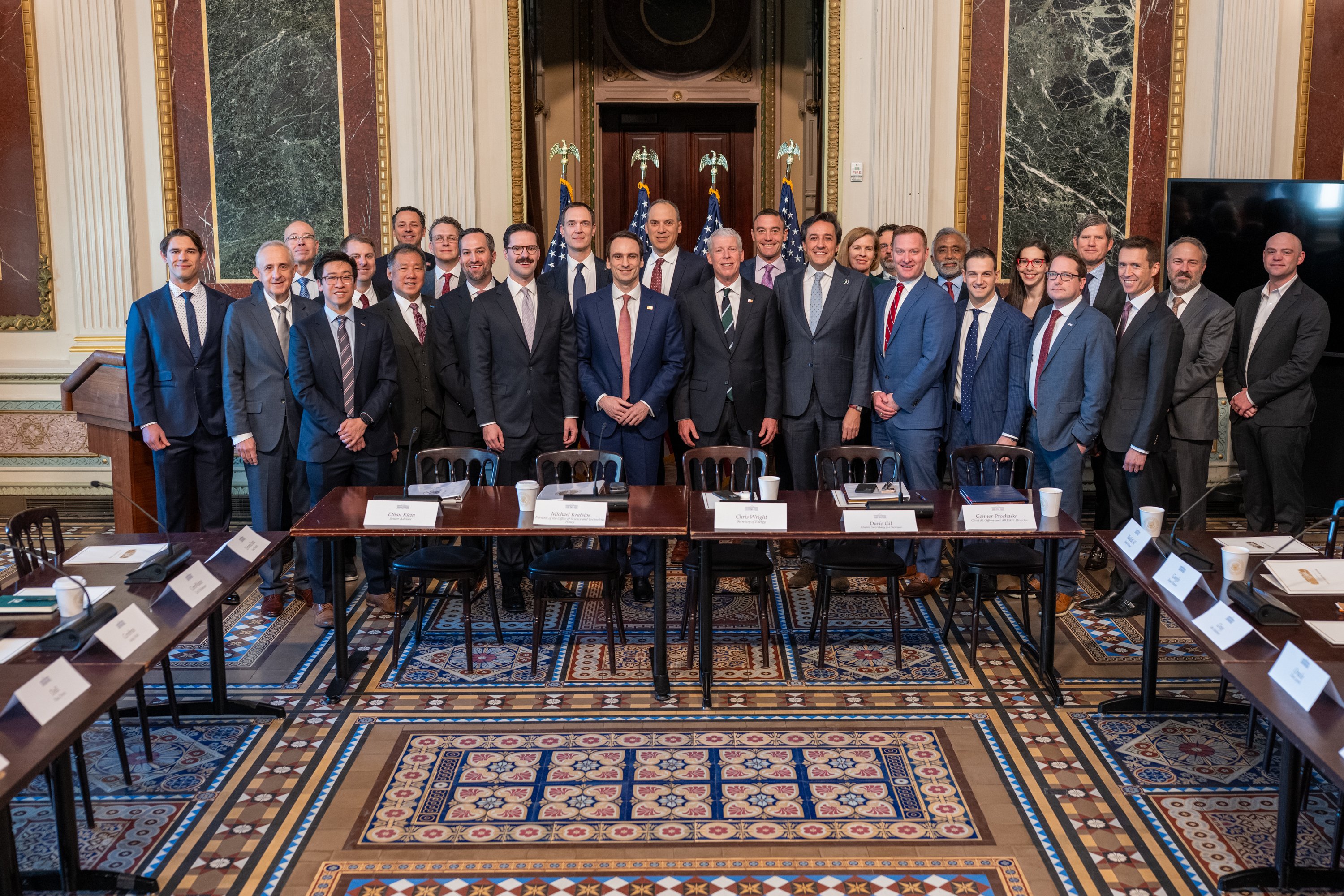
Today, Radical AI announced a Memorandum of Understanding with the U.S. Department of Energy to advance AI-driven materials discovery in support of the Genesis Mission.
The agreement establishes a framework for collaboration across closed-loop autonomous research infrastructure, translational research on novel materials, next-generation AI capabilities for scientific discovery, and joint pilot projects and public-private partnership models that align federal, industrial, and philanthropic investments. It also reflects our shared conviction that the pace of American innovation now depends on our ability to close the loop between computation and physical experimentation at unprecedented scale.
In domains like hypersonics, nuclear energy, and critical materials, discovery is constrained by experimental throughput and validation. Traditional trial-and-error approaches are too slow, and purely computational methods are insufficient on their own. Closed-loop autonomy changes this dynamic. By tightly integrating models, experiments, and learning, we can explore complex design spaces like high-entropy alloys and extreme-environment materials far more efficiently than conventional approaches allow. This capability directly supports problems of national importance: national security, energy independence, and long-term economic resilience.
In May, we submitted recommendations to the White House Office of Science and Technology Policy for the 2025 National AI R&D Strategic Plan calling for integrated AI platforms, national data infrastructure, and pilot manufacturing facilities. Those recommendations now appear throughout the Genesis Mission’s American Science and Security Platform. This MoU translates that policy vision into a concrete agreement to discuss specific future projects in support of the shared vision.
Radical AI’s self-driving lab in New York already provides insight into what autonomous materials research would look like in practice. Every day, the Radical AI system generates predictions, synthesizes candidates, and captures experimental data that feeds back into our models. The challenge we face now is scale. The materials challenges that define American competitiveness in key areas such as hypersonic flight, advanced batteries, quantum computing and fusion energy, require experimentation at volumes no single organization can achieve alone. The DOE’s national laboratories, with their unique capabilities in high-performance computing, advanced characterization, and materials synthesis, are critical infrastructure for scaling and validating materials for the world’s most important industries.
The Genesis Mission calls for doubling American research productivity. Every semiconductor, every aerospace alloy, and every energy storage breakthrough begins with atoms arranged in new configurations. Materials science sits at the foundation. Radical AI can advance that research productivity increase into industry, realizing gains in economic output, energy infrastructure, and national security.
The MoU with the Department of Energy provides structure for the work ahead: collaboration leading to joint development and coordinated investment in the infrastructure that will define American scientific capability for the next century.