Oct 20, 2026


Radical AI's self-driving lab named one of TIME’s Best Inventions of 2026
A look inside the TIME 2026 Best Invention supercharging scientists.
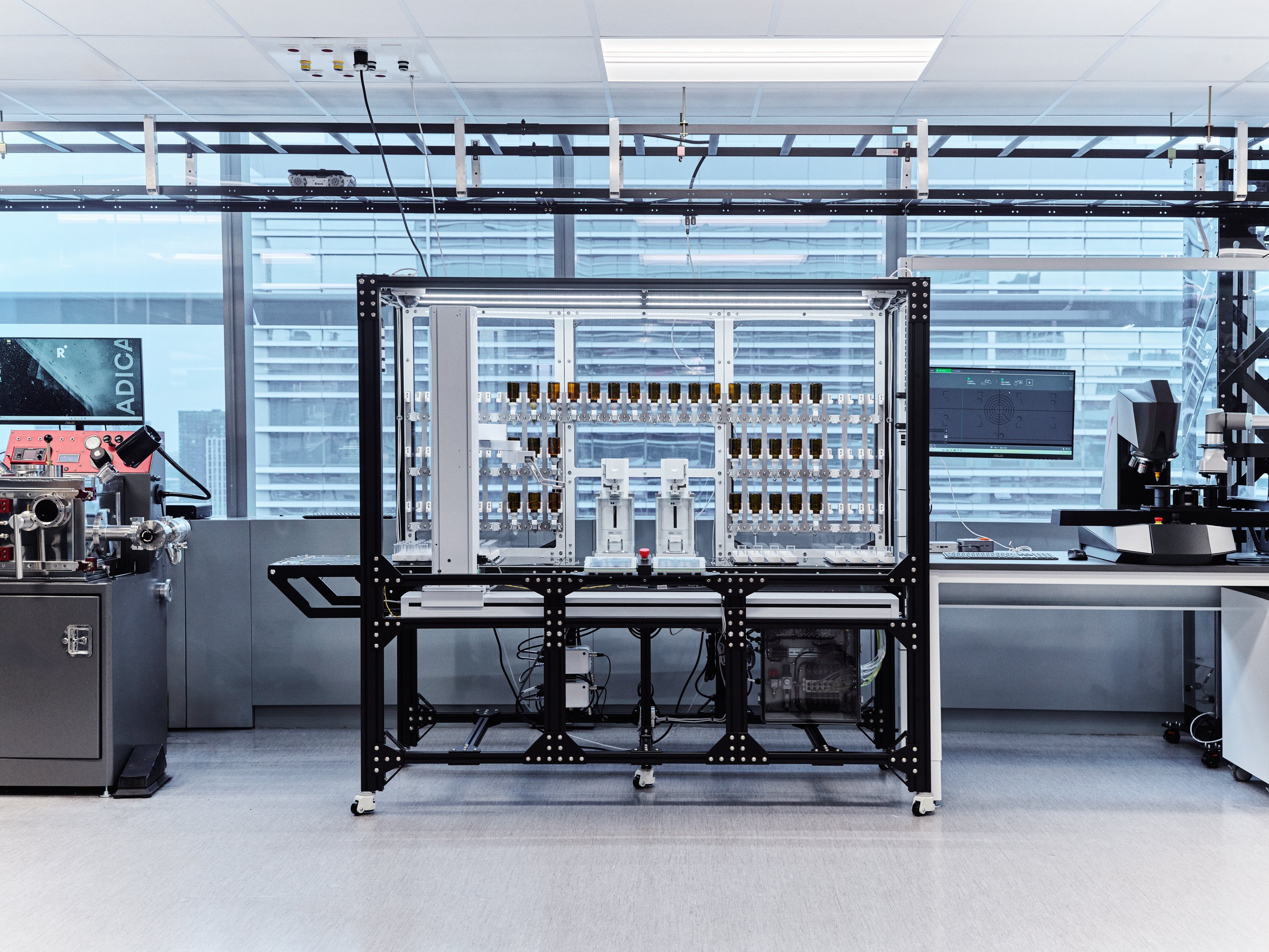
TIME has named Radical AI’s self-driving lab one of the Best Inventions of 2026.
Discovering a new material takes roughly 20 years. The bottleneck is human capacity: research moves only as fast as scientists can run experiments and learn from the results. Our self-driving lab removes that limit.
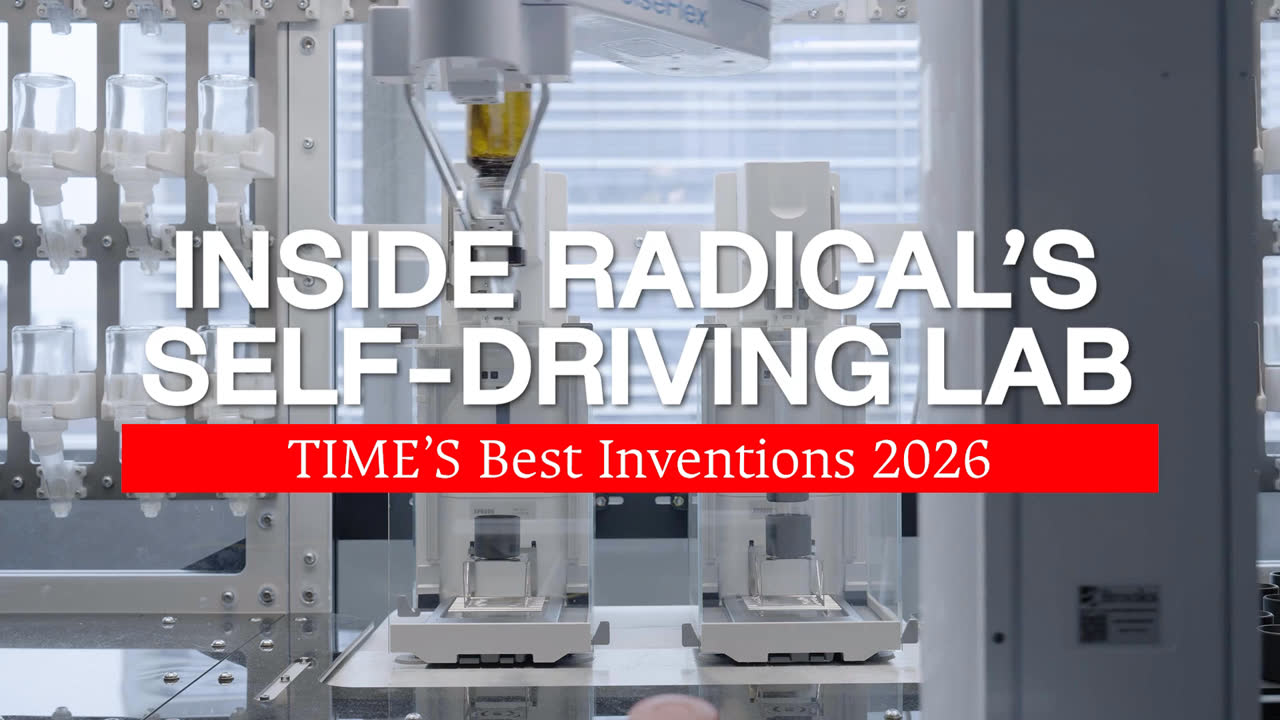
How it works:
Scientists set the target. Researchers enter the properties they need in a novel material.
AI agents develop hypotheses. Antimatter, our AI engine, reads hundreds of thousands of research papers and screens billions of material compositions to find the most promising candidates.
Robots run the experiments. Autonomous experimentation happens in a physical lab, around the clock. Robots build and test each candidate.
Every result becomes data. The lab captures data from every experiment and uses it to inform the next step. Each cycle sharpens the one that follows.
Novel Materials in Weeks, Not Decades
In August, we announced that this approach produced a novel material in just 16 weeks. Testing by the Purdue Applied Research Institute confirmed it resists corrosion in extreme temperatures 125 times better than C103, a leading aerospace alloy widely used in rocket construction.
Self-driving labs are transforming research and development across industries, and TIME chose ours as the one to feature on its Best Inventions of 2026 list. “Materials will be what accelerates the possibilities of new inventions, not what slows them down,” co-founder and CEO Joseph F. Krause told TIME.
Every breakthrough technology depends on materials. Rocket, reactor, and chip development all face the same dilemma: the materials they need do not yet exist.
With a self-driving lab materials can now be designed and developed in tandem with the technologies they enable.