Aug 7, 2026


Purdue Applied Research Institute Confirms Superior Performance of Radical AI Materials
In a head-to-head torch test, new materials invented in the Radical AI lab outperform the environmental survivability of industry-leading aerospace material C103 by 125x.
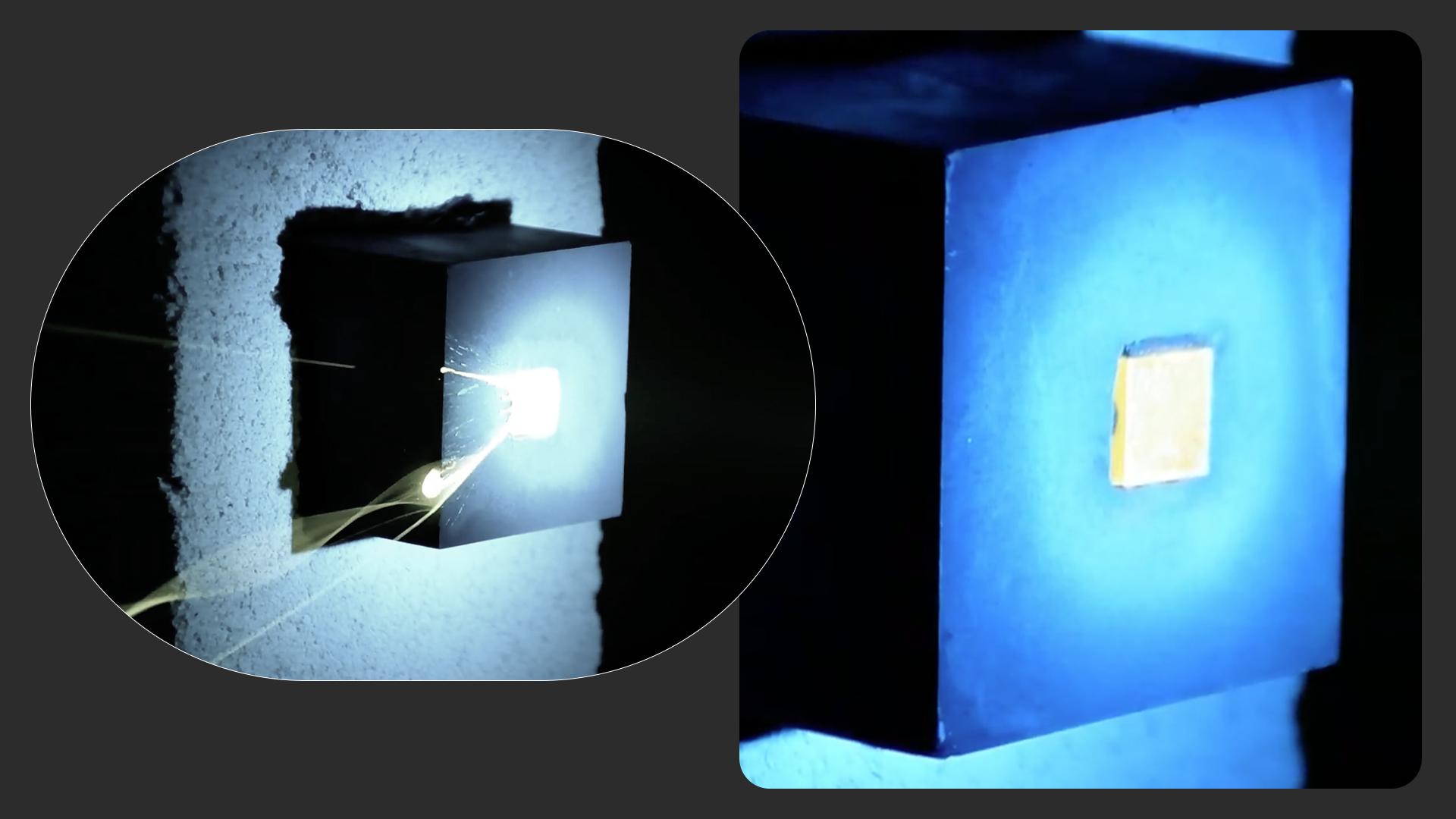
C103 has been in use since the Apollo program. And ever since then, the aerospace industry has been trying to replace it. It rapidly degrades at high temperatures, requiring coatings and frequent replacements. It has a fragile supply chain. And there’s a years-long wait time to even get it.
Radical set out to create a replacement in our self-driving lab, and over 16 weeks, AI-generated hypotheses and an autonomous lab generated over 300 novel materials in a domain that has only experimentally studied 3,493 unique alloys in this space over 20+ years.
Radical AI partnered with Purdue Applied Research Institute to verify that some of the most promising of these novel materials outperform C103.
This video shows C103 and RAI-939 in a head-to-head torch test that simulates flight environments and can heat materials beyond 2,500 degrees celsius. The Radical sample’s environmental resistance outperforms the legacy material by 125x, experiencing a 0.25% mass gain after a minute of torch testing while C103 saw a 32% mass loss.
Purdue Applied Research Institute’s Hypersonics Laboratory Director Greg Scofield commented: “This alloys space is hard. I've seen PhD specialists struggle two years and get nowhere. Radical did it in a matter of hours.”
Now, we are aiming to scale up production of the alloy to make bigger test articles. Getting bigger test pieces, more representative of manufacturing methods, more quality control type data to prove out a spec sheet.