Sep 23, 2026


6 Predictions, 6 Validated Materials: Enabling Frontier Electronic Property Materials
Semiconductor research hadn’t yet cracked the difficult task of ideating electronic property materials at very high speed. In less than two months, we created a working model, made the samples in our self-driving lab, and verified they met the target property with a third party.

By Michael Haverty
Head of Computational Materials and Semiconductors
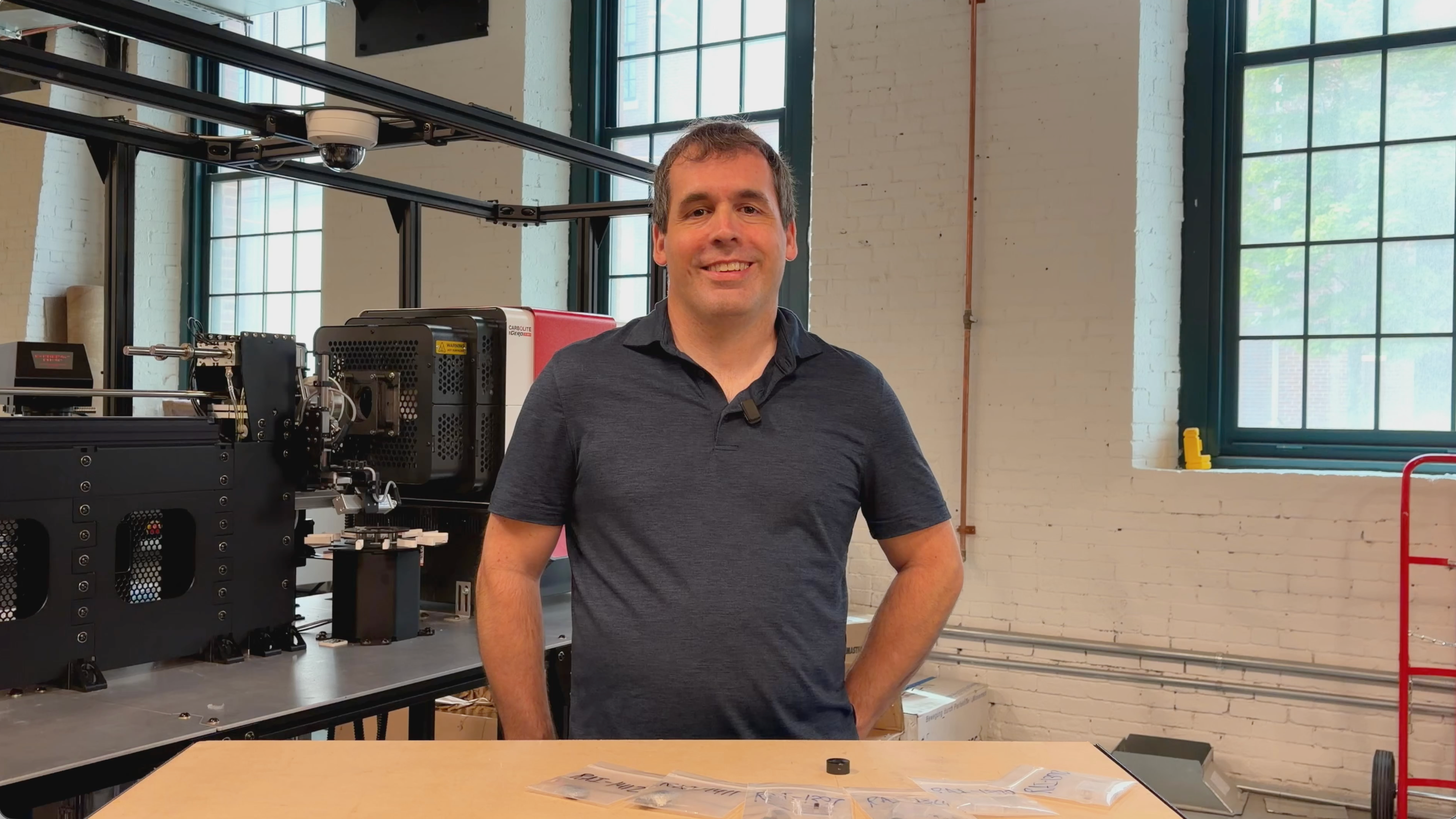
At Radical we're able to rapidly validate computational proposals in our self-driving lab. Sometimes that sends the models back to the drawing board. But recently, models Yuri Sanspeur, Delia McGrath, and I designed to identify unique electronic property material targets proved out: Of six materials proposed by our model, all six real materials met our electronic performance target.
This is a very promising development for our semiconductor program, and puts us several steps closer to advancing speed and efficiency of the physical build-out of critical AI infrastructure.
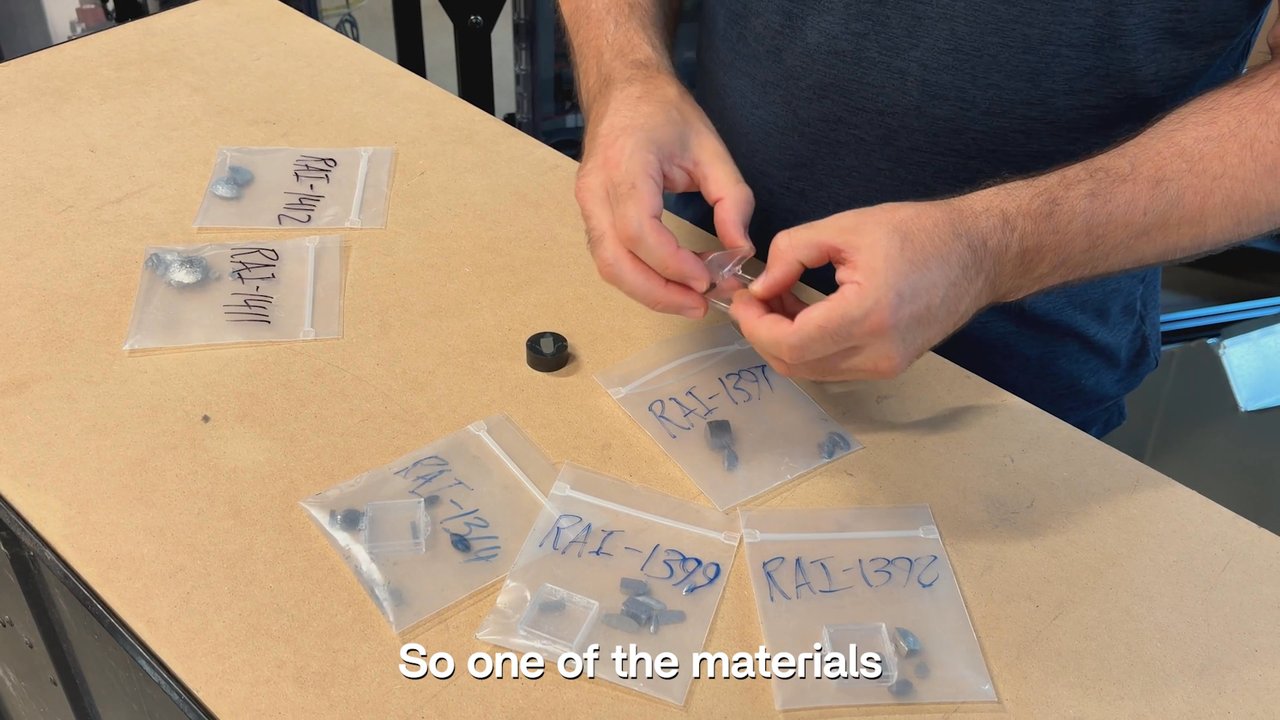
New Quick-Turn Electronic Property Models to Accelerate R&D
In the world of atomic scale modeling, plenty of groups and companies have developed high quality models for materials’ energetic and stability properties. Fewer have tackled quick-turn high throughout electronic property prediction, because of the inherent challenges and complexity of capturing the interactions of electrons and their transitions and scattering with their surrounding atomic environments.
Radical has moved to the frontier to predict materials with electronic property targets. Our ground truth is experimental data. We don’t put much weight in predictions we can’t prove in our lab. We are able to autonomously predict and then synthesize multiple candidates and measure them to test, confirm, or refute our predictions in the real world.
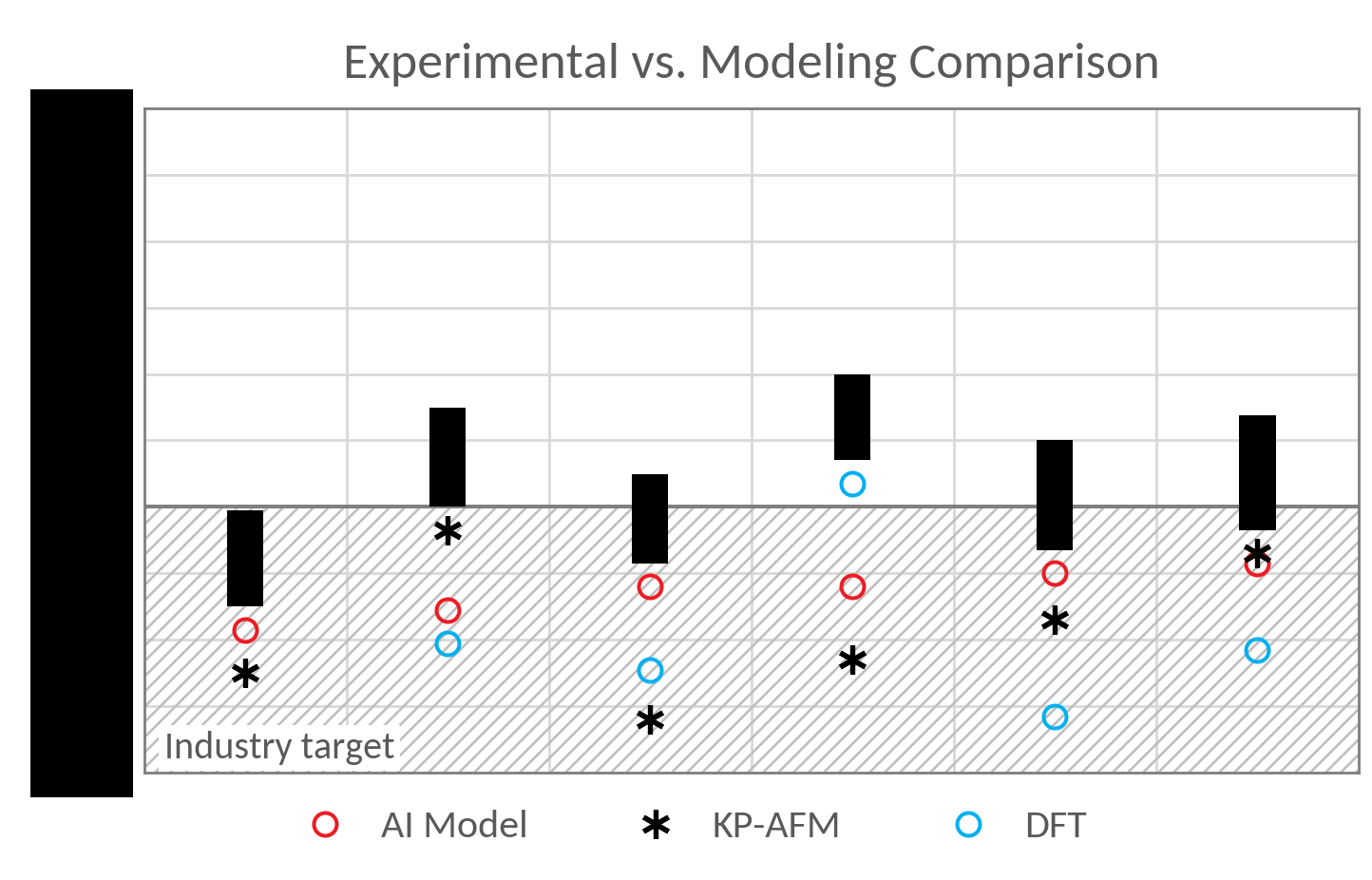
In just seven weeks, our self-driving lab went from ideating an electronic property model to screening millions of materials to making the material and finally to measuring their properties, which we did with an objective third party. We found multiple predicted materials with the target electronic property in less than two months. Once we bring the electrical characterization online in our self-driving lab, we could cut this down to as little as a month. All six of the materials we made hit the electronic performance target.
AI Thinks Different
One of the compounds our AI model predicted to target had an element that was unexpected. It was such an unusual proposed material that we genuinely thought the model might be wrong.
For electronic properties, the measured value often varies depending on what side of the periodic table the element sits. This confounding compound contained an element from the opposite end of the periodic table than we expected.
But our AI proposals often look quite different than what a human scientist might think to try, so we took it to the lab and put the model to the test with real experimental data.
We measured the electrical property using an atomic force microscope after polishing and cleaving the sample. Even the material with the unexpected element hit our electrical performance target.
Physical Validation for Rapidly Testing Models
We are an AI company, and while we love data that confirms hypotheses, data we didn’t predict or expect is also extremely valuable for our iterative learning. The previously mentioned model successfully ideated real unique materials verified by experiments. We also developed a second electronic property discovery model that didn’t demonstrate the same fast success. Ground truth experimental data has immense value, both the “good” type that confirms our model predictions, but also the “bad” type that tells us our models need more work. We need both the “good” and the “bad” data to enable us to improve the accuracy and universality of our models and the materials we make.
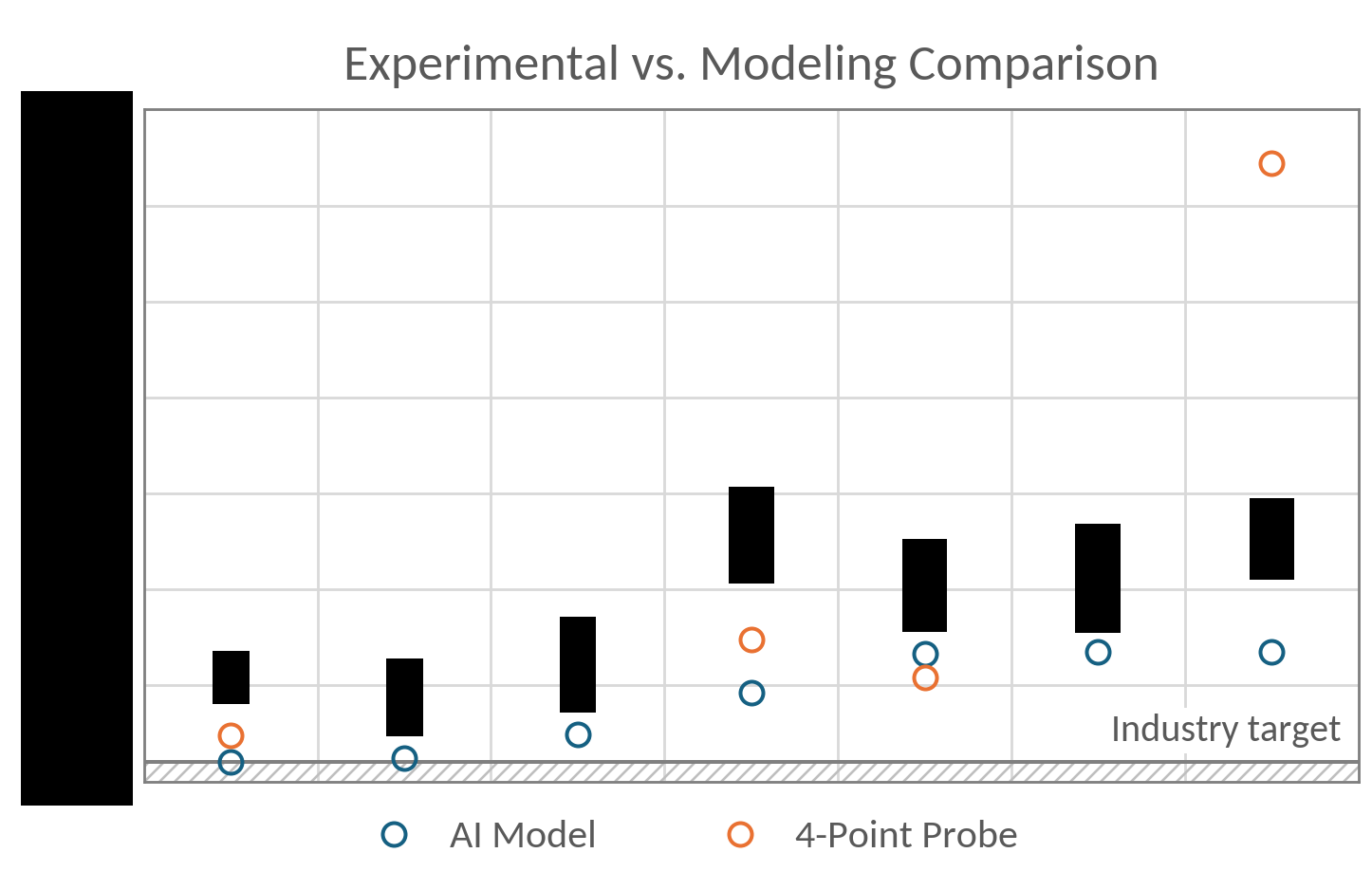
Of the samples we targeted to test that model, two of them were too brittle to section into the sample size we needed for characterization. This will inform the next version of our property model to include a screener for mechanical properties such as ductility that we developed through our previous extensive high entropy alloys work here and here.
Moving beyond the world of materials discovery to materials design and integration requires such multi-vector property screening to find the materials with the best chance to perform in the complex multi-material and real-use environment world.The results on the remaining materials were quite mixed. One experimental result in particular where the experimentally measured property was below what the model predicted suggests the model needs work.
That’s the beauty of working at a fast moving company like Radical AI that already has our self-driving lab up and running. We quickly learned in the real world that our model needed more work. We’ve now gone back to the drawing board for our next iteration of the loop in our learning cycle. For the electronic property model, that means it needs more refinement, and we’re exploring a more rigorous property calculation that is still high throughput. Once that improved model is ready, we’ll fabricate any new interesting material it recommends to test the validity and iterate until we feel confident we have an interesting material with which to proceed to the next step.
What’s Next From Here
Now that we’ve fabricated multiple interesting new bulk materials, we are moving onto thin film of the promising materials and some additional compounds. The goal is to ultimately enable R&D for faster, more efficient semiconductors.
The road to a new material in a chip that you can hold in your hand in your phone is long and winding. Radical is accelerating the first part of that journey while gathering valuable data to enable final development along the last mile.