Sep 29, 2026


Sandia National Laboratories Partners With Radical AI To Discover New Materials for Hydrogen Purification
An AI-powered mission to diversify American energy sources and enable the next chapter of technological development.
Millions of Americans stand to benefit from a diversified energy economy. Hydrogen power, which leaves just water as a byproduct, is an exciting site of invention in this pursuit.
Sandia National Laboratories is partnering with Radical AI to perform research on metal-hydrogen interactions and discover new materials to separate hydrogen from waste gas streams.
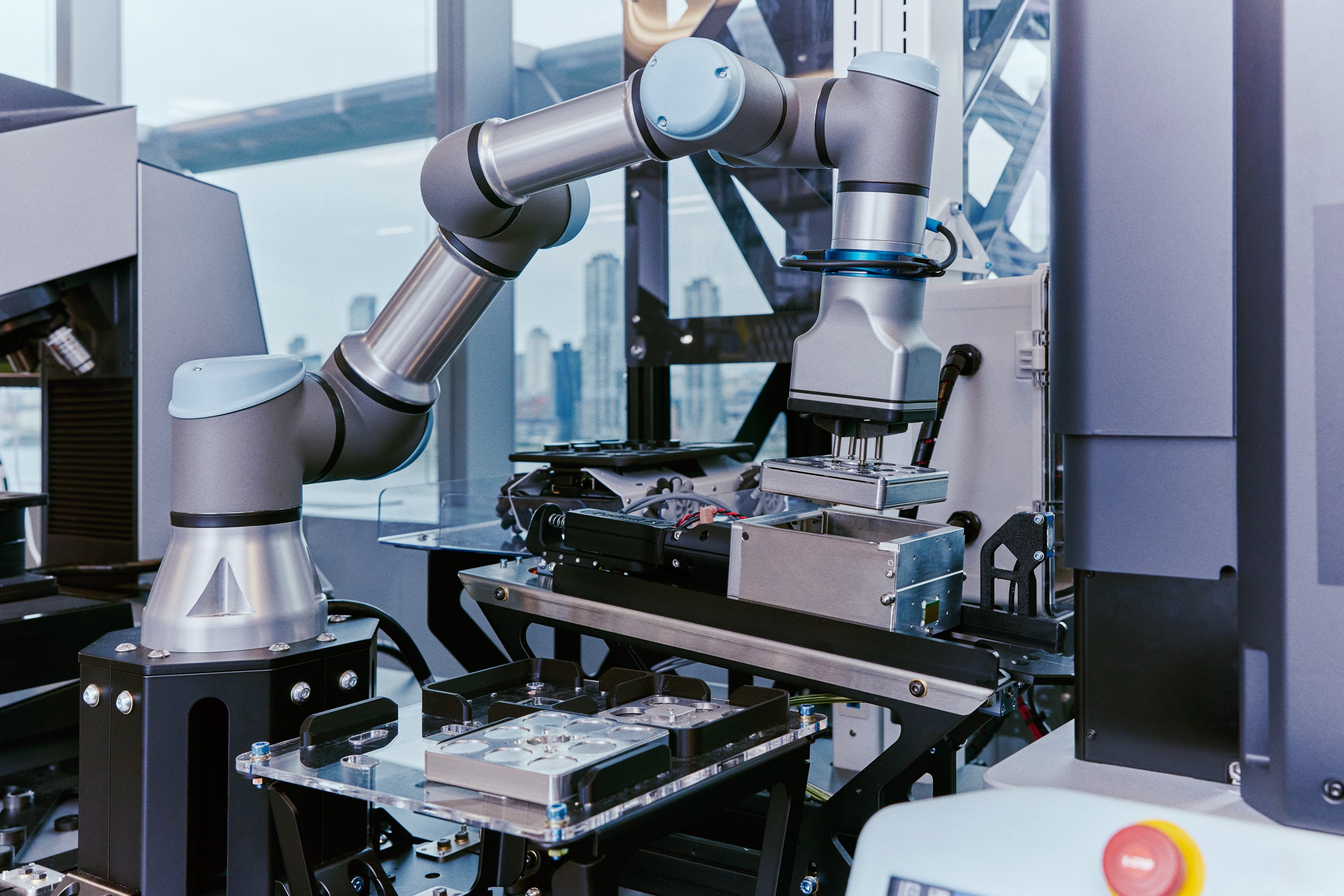
As a frequent collaborator with leading American technology companies, Sandia chose to do this research on Radical AI’s platform because of its distinguished ability to bring together AI, lab automation, and comprehensive data analysis in a self-driving lab that reaches results fast.
“There is a lot of work in high-throughput predictions, but the ability to drive robotic synthesis and feed those experimental findings back into our research is a big part of why we’re so excited to partner with Radical on the discovery of new materials for hydrogen purification. Simulation only gets you so far; the experimental data is what we think will really accelerate the discovery of new materials,” says Sandia Staff Scientist Vitalie Stavila.
Why Hydrogen Purification Will Shape the Future
Better hydrogen production, purification, and handling promises a new chapter of technological progress.
Data center power, steelmaking, heavy-duty trucking, and shipping are all sectors racing to adopt these improvements, and the Department of Energy has set a public target of cutting clean hydrogen production costs to $1 per kilogram by 2031.
Cheaper, more durable separation membranes are key drivers, since purification and handling are some of the biggest challenges in delivering hydrogen to a refinery, a fertilizer plant, or a truck stop.
The Challenge at Hand
Both emerging production methods like geologic / natural hydrogen and existing pathways such as steam methane reforming and biological routes face a common problem: After the hydrogen is made, it must be separated from other gases.
Palladium is the gold-standard material for membrane-based hydrogen separation, which allows for more efficient reactor designs than the pressure-swing methods used at most large plants today. But it's expensive.
Traditionally, attempts to source alternatives have demanded years of work hand-fabricating alloy ribbons, coating them, and running each one through temperature and pressure tests that took between days and weeks per sample—if the sample didn’t break entirely.
And even successful attempts at using new materials for this longstanding problem have faced a challenging tradeoff: Materials that move hydrogen quickly tend to become brittle and break down quickly, while those that last longer are slower.
What’s Ahead
Radical accelerates complicated research endeavors and validates findings with real experimental data in a self-driving lab. AI can pursue multiple simultaneous goals by processing complex experimental data and correlating it back to the underlying materials science. With knowledge across wide compositional ranges, varying microstructures, and processing histories, the system ultimately proposes the next best experiment more effectively than any human could.
By coupling AI models with automated synthesis and characterization, the team is working toward faster iteration on membrane materials that hydrogen can penetrate while other gases remain behind.
This partnership reflects a shared interest in charting a faster route to world-changing materials. As the work progresses, Sandia National Laboratories and Radical AI look forward to sharing the results and how these findings will shape new technology.